

BPC-157 and TB-500: (BPC-157 TB-500 blend) Benefits for Tissue Repair

BPC-157 and TB-500: (BPC-157 TB-500 blend) Benefits for Tissue Repair
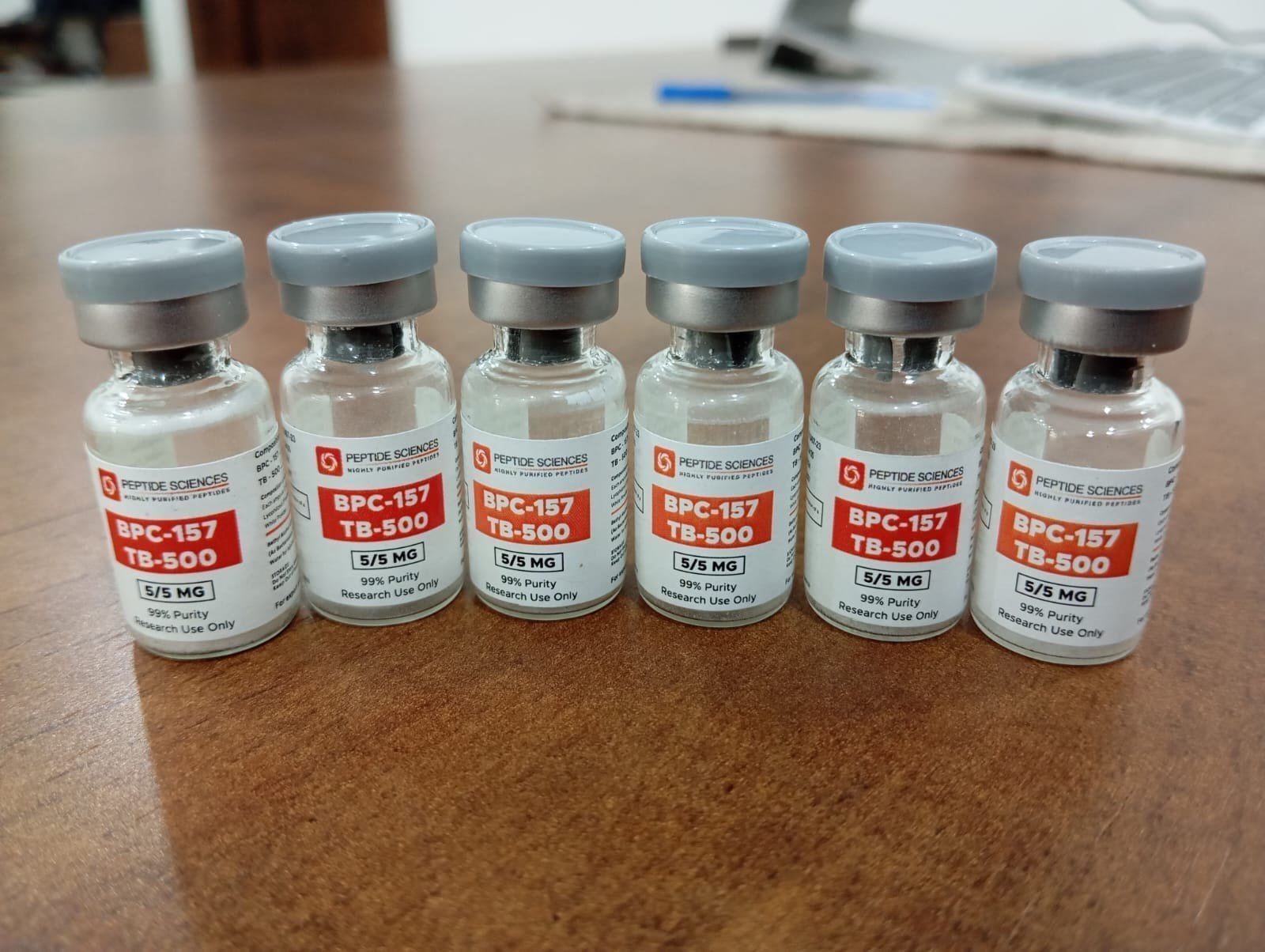
BPC-157 TB-500 blend Few peptide combinations attract as much consistent research interest as BPC-157 and TB-500. Individually, each compound has generated a substantial body of published preclinical data. Together, they form a synergistic blend that researchers use to study tissue repair mechanisms, inflammation modulation, and cellular regeneration across multiple experimental models. For UK-based scientists sourcing reliable research compounds, understanding what each peptide does — and why the combination matters — is the starting point for any well-designed protocol. Explore the full peptide range at the EvolvelabsUK homepage.
What Is BPC-157 and What Does Research Tell Us
BPC-157 stands for Body Protection Compound 157. It is a synthetic pentadecapeptide — a chain of 15 amino acids — derived from a partial sequence of human gastric juice protein. Research interest in BPC-157 centres on its apparent ability to support tissue repair across gastric, musculoskeletal, and neurological experimental models.
Published research indexed on PubMed has investigated BPC-157’s interaction with several biological pathways. These include modulation of nitric oxide (NO) synthesis, upregulation of growth hormone receptor expression, and promotion of angiogenesis. Each mechanism makes BPC-157 a relevant compound for researchers studying wound healing, tendon repair, and inflammatory pathway regulation.
BPC-157 is water-soluble and stable in gastric acid, which distinguishes it from many other research peptides that require specific reconstitution solvents. The Glow 70mg peptide stack at EvolvelabsUK includes BPC-157 as one of three active components, designed for researchers studying multi-compound regenerative protocols.
What Is TB-500 and How Does It Differ from BPC-157
TB-500 is a synthetic analogue of Thymosin Beta-4 (Tb4), a naturally occurring protein found in high concentrations in blood platelets and wound fluid. Its primary structural feature is the actin-binding domain, which allows TB-500 to regulate actin polymerisation — the cellular process underpinning cell migration, proliferation, and wound closure.
Where BPC-157 TB-500 blend works primarily through growth factor receptor modulation and NO signalling, TB-500 acts at the cytoskeletal level. It promotes the migration of endothelial cells and keratinocytes into wound sites, supports new blood vessel formation, and reduces local inflammation by downregulating pro-inflammatory cytokines including IL-1b and TNF-a. Research published in the Annals of the New York Academy of Sciences details Thymosin Beta-4 roles in cardiac and dermal repair models.
TB-500 is highly water-soluble and stable across a wide pH range, making it fully compatible with bacteriostatic water reconstitution and suitable for blending with BPC-157 in a single preparation.
Why Researchers Combine BPC-157 and TB-500
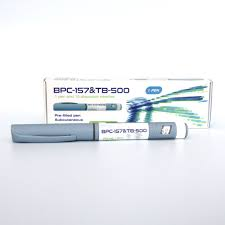
The BPC-157 and TB-500 blend is not simply a convenience formulation. The two peptides operate through complementary but distinct mechanisms, which means their combined activity addresses tissue repair through multiple simultaneous pathways. BPC-157 TB-500 blend targets growth factor receptor signalling and vascular growth. TB-500 targets cytoskeletal dynamics and cellular migration. Together, they provide a more comprehensive model of regenerative activity than either compound produces alone.
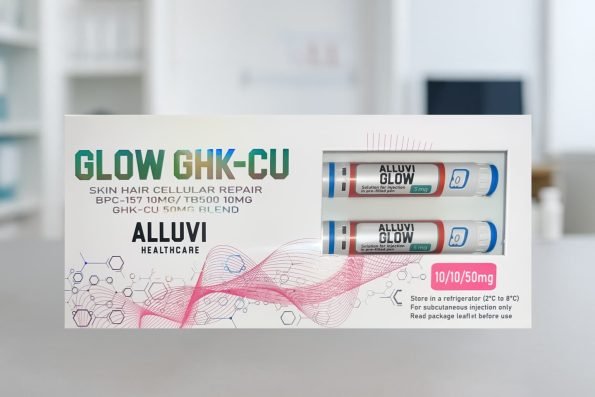
In preclinical research models, the combination has been studied in contexts involving musculoskeletal injury, gastrointestinal integrity, and neurological repair. The Glow 70mg triple blend, which combines BPC-157, TB-500, and GHK-Cu at specified research quantities, represents the most complete multi-compound regenerative blend currently available through EvolvelabsUK.
BPC-157 and TB-500 Blend Reconstitution Protocol
Materials
You will need bacteriostatic water (BW), sterile insulin syringes (25-29G), alcohol prep swabs, and a clean preparation surface. Both BPC-157 and TB-500 dissolve readily in BW without requiring acidified water or acetonitrile, which simplifies preparation considerably compared to some other research peptides.
Steps
Draw the target BW volume into the syringe. Insert the needle through the rubber stopper at a shallow angle and direct the liquid slowly down the inner vial wall, not directly onto the powder. Swirl gently until complete dissolution — never shake. Label the vial with the reconstitution date and refrigerate immediately at 2-8°C.
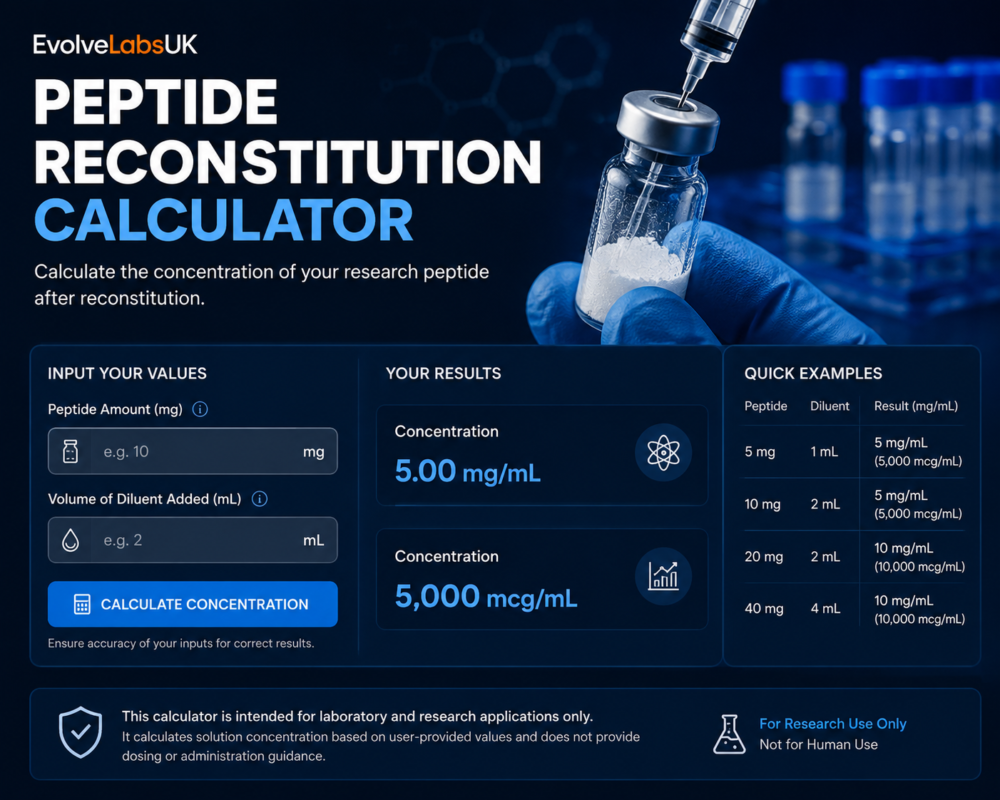
BPC-157 TB-500 Blend Dosage Chart: Research Reference
| Vial Size | BW Added | Concentration | Volume per 250mcg | Volume per 500mcg |
|---|---|---|---|---|
| 10mg blend | 1ml | 10mg/ml | 0.025ml | 0.05ml |
| 10mg blend | 2ml | 5mg/ml | 0.05ml | 0.10ml |
| 10mg blend | 4ml | 2.5mg/ml | 0.10ml | 0.20ml |
This reference applies to a standard 10mg blend containing equal quantities of BPC-157 TB-500 blend. Researchers using the Glow 70mg triple blend should consult that product’s COA for per-compound quantities. All figures above are for laboratory research reference only.

Storage and Handling Requirements
Lyophilized BPC-157 and TB-500 are stable at room temperature during transit but should be stored at -20°C for long-term preservation before reconstitution. Protect from light and moisture at all times. Once reconstituted, refrigerate at 2-8°C and use within 30 days. Avoid repeated freeze-thaw cycles, as these degrade peptide bond integrity across both compounds.
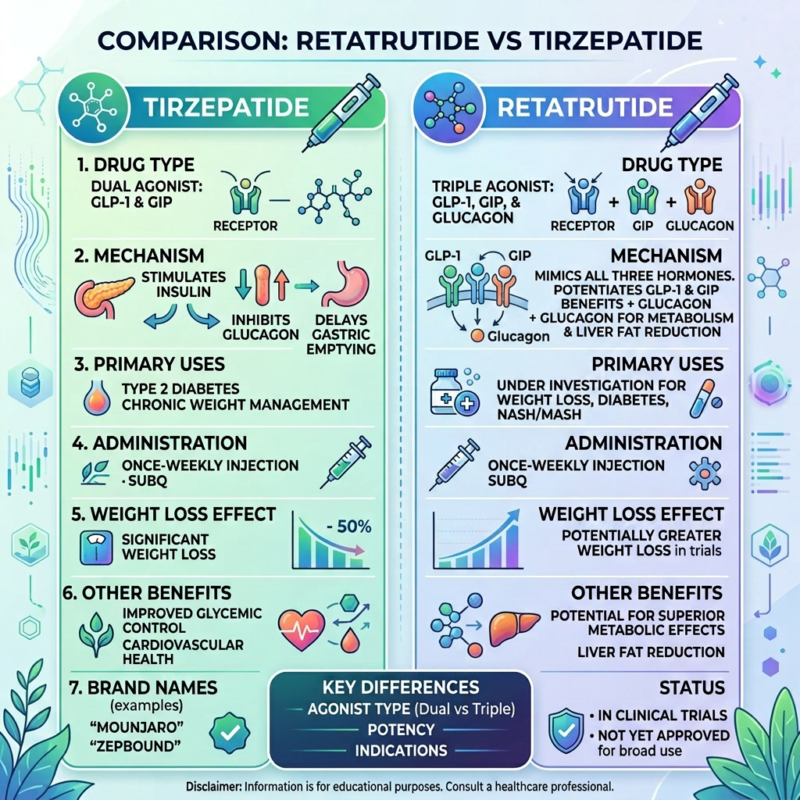
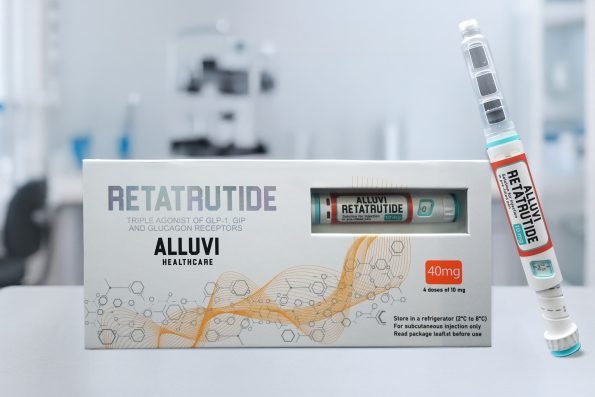
Researchers managing broader compound inventories alongside BPC-157 TB-500 blend will find related products including NAD+ injections and Alluvi Retatrutide 40mg in the EvolvelabsUK catalogue, each with specific storage specifications on their product pages.
Where to Source BPC-157 TB-500 Blend in the UK
Research-grade BPC-157 and TB-500 must meet minimum purity thresholds of 98% or above, confirmed by HPLC and mass spectrometry from an independent laboratory. Suppliers who do not provide a batch-specific certificate of analysis (COA) on request introduce unacceptable variables into experimental design.
EvolvelabsUK maintains a UK-based research peptide inventory with full documentation. Our sourcing philosophy is detailed on the About EvolvelabsUK page. Researchers ready to procure can browse all available formats in the EvolvelabsUK shop. For laboratories building broader compound inventories, the retatrutide research bundle and tirzepatide 40mg pen complement regenerative peptide protocols with metabolic receptor research compounds. Published background on GHK-Cu — the third compound in the Glow stack — is available through PubMed Central for researchers evaluating the full triple blend.
Research Use Only: All products referenced are supplied strictly for laboratory and scientific research purposes. Not for human consumption, clinical use, or veterinary application. Always comply with applicable UK regulations.

One thought on “BPC-157 and TB-500: (BPC-157 TB-500 blend) Benefits for Tissue Repair”
Comments are closed.