
Retatrutide vs Tirzepatide

Retatrutide vs Tirzepatide: Which Incretin Agonist Fits Your Research Design
The question of retatrutide vs tirzepatide comes up with increasing frequency among UK researchers designing metabolic, endocrine, and receptor-based study protocols. Both are synthetic incretin peptides with substantial published phase 2 data. Both target overlapping receptor systems. But the differences between them — particularly the addition of glucagon receptor (GCGR) agonism in retatrutide — produce meaningfully distinct experimental profiles that influence which compound belongs in a given study design. This guide lays out that comparison clearly so researchers make evidence-informed sourcing decisions. View all available formats at the EvolvelabsUK homepage.

What Is Retatrutide?
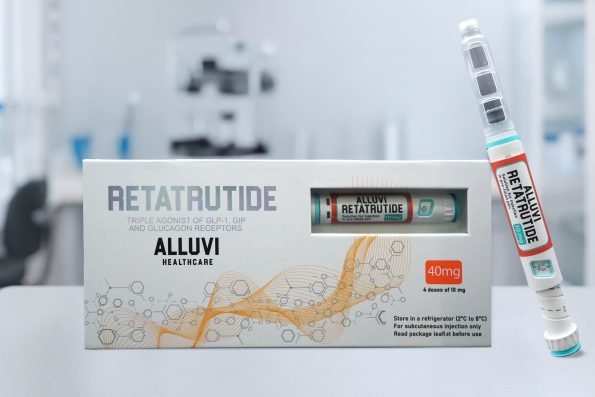
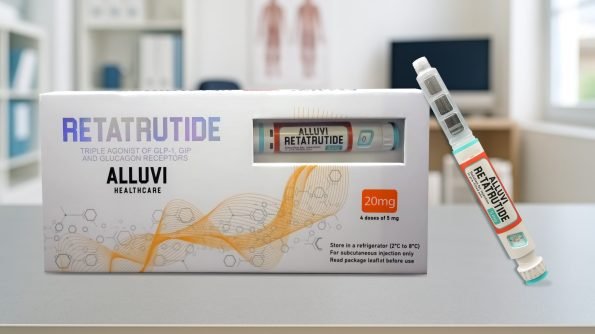
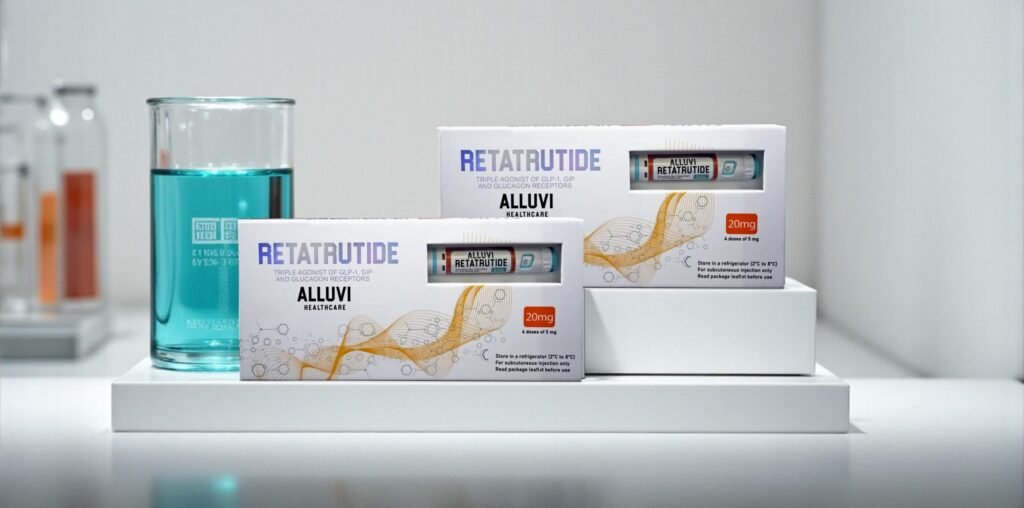
Retatrutide is an investigational research peptide designed to activate three different receptors.
These include:
• GLP-1 receptor
• GIP receptor
• Glucagon receptor
This triple agonist profile has attracted considerable interest among researchers investigating metabolic regulation and energy balance.
Because Retatrutide interacts with three separate pathways, laboratories continue studying its broader biological effects across multiple research models.
Researchers looking for premium Retatrutide products often prioritize suppliers offering HPLC tested peptides with verified peptide COA documentation.
Recommended products
What Is Tirzepatide?
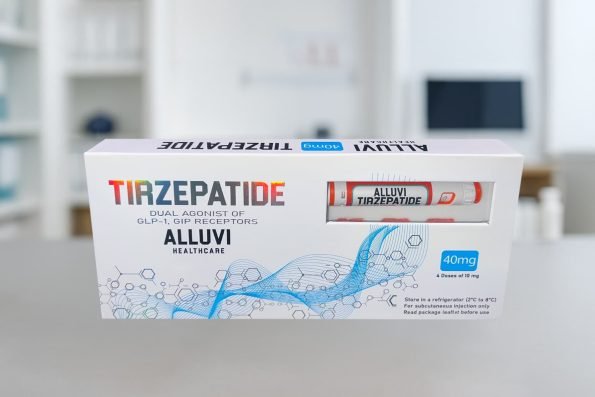
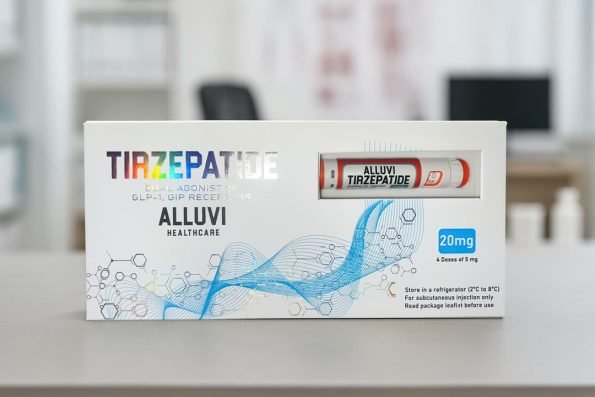
Tirzepatide is another advanced research peptide used extensively in metabolic studies.
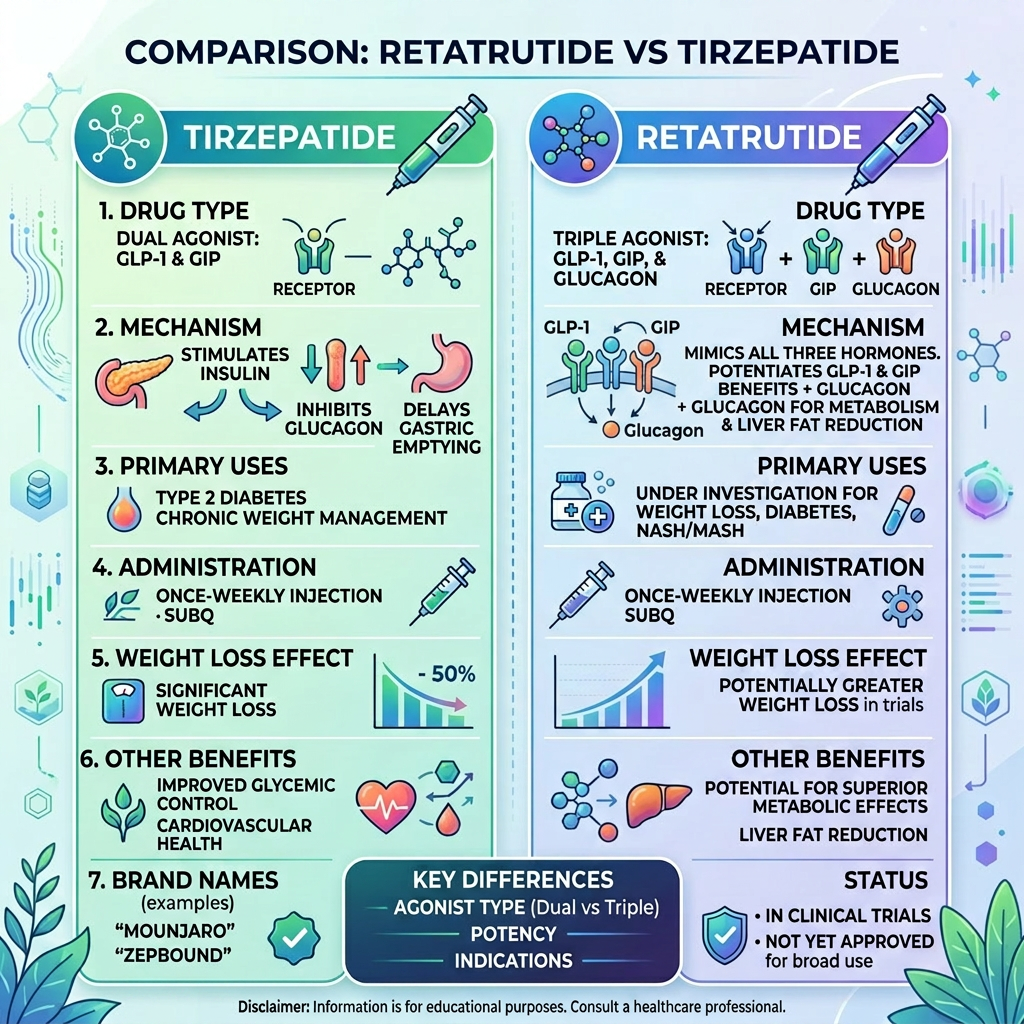
Unlike Retatrutide, Tirzepatide activates two receptors.
These include:
• GLP-1 receptor
• GIP receptor
Its dual receptor activity has made Tirzepatide one of the most researched peptide compounds in recent years.
Receptor Activity
Retatrutide
• GLP-1
• GIP
• Glucagon
Tirzepatide
• GLP-1
• GIP
The addition of glucagon receptor activation gives Retatrutide a broader biological profile for scientific investigation.
Research Focus
Retatrutide research often explores:
• Energy expenditure
• Fat metabolism
• Metabolic regulation
• Multi-pathway receptor interactions
Tirzepatide research commonly examines:
• Glucose regulation
• Appetite signalling
• Dual incretin mechanisms
• Hormonal interactions
Scientific Complexity
Retatrutide offers a more complex receptor profile due to triple agonist activity.
Tirzepatide provides a simpler dual agonist mechanism that remains highly valuable across numerous research applications.
Why HPLC Testing Matters
When comparing Retatrutide vs Tirzepatide, peptide quality remains one of the most important factors.
Researchers should always look for:
• HPLC tested peptides
• Verified peptide COA
• Batch consistency
• Laboratory-grade manufacturing
• Secure packaging
Independent analytical testing helps confirm product purity and supports reliable scientific outcomes.
Choosing a Trusted UK Peptide Supplier
Whether purchasing Retatrutide or Tirzepatide, supplier quality influences research consistency.
A trusted peptide supplier UK should provide:
• HPLC purity testing
• Certificate of Analysis
• Batch traceability
• Secure shipping
• Responsive customer support
At Evolve Labs UK, researchers gain access to premium laboratory peptides produced with quality-focused standards and transparent documentation.
Explore our products:
https://evolvelabsuk.co.uk/SHOP
The Receptor Profiles: Where Retatrutide and Tirzepatide Diverge
Tirzepatide is a dual agonist at the GLP-1 receptor (GLP-1R) and the glucose-dependent insulinotropic polypeptide receptor (GIPR). Its 39-amino-acid structure includes a C20 fatty di-acid moiety that extends half-life and enables weekly dosing in clinical research designs. At GLP-1R, it stimulates insulin secretion, suppresses glucagon, and slows gastric emptying. At GIPR, it enhances the incretin effect and modulates adipose lipid metabolism. Importantly, tirzepatide shows preferential potency at GIPR relative to GLP-1R, which is one reason its metabolic effect profile differs from GLP-1 mono-agonists such as semaglutide.
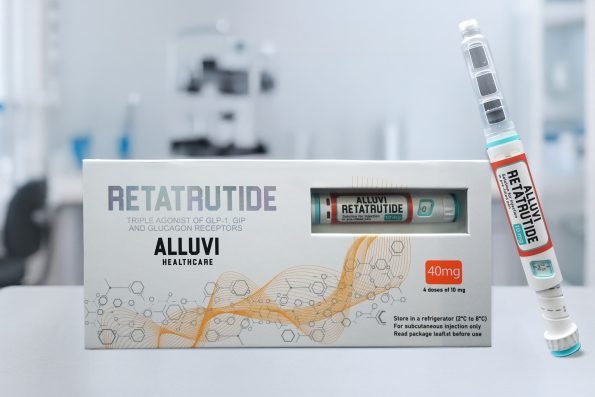
Retatrutide adds a third receptor axis: GCGR activation alongside both GLP-1R and GIPR engagement. The glucagon receptor axis introduces thermogenic energy expenditure through hepatic and adipose GCGR signalling, a mechanism entirely absent from tirzepatide’s profile. This thermogenic component is why retatrutide research outcomes in obesity models have exceeded those of tirzepatide in comparative literature, with 48-week weight reduction data reaching 24.2% for retatrutide against tirzepatide’s published benchmarks from SURPASS trials. The Alluvi Retatrutide 40mg provides UK researchers with research-grade access to this triple-receptor compound in certified batches.
Side-by-Side: Retatrutide vs Tirzepatide Research Comparison
| Parameter | Tirzepatide | Retatrutide |
|---|---|---|
| Receptor targets | GLP-1R + GIPR (dual) | GLP-1R + GIPR + GCGR (triple) |
| Development stage | FDA/MHRA approved (clinical) | Phase 3 (research-grade available) |
| 48-week weight loss (Phase 2) | ~22% (SURMOUNT-1) | ~24.2% (12mg cohort) |
| Thermogenic mechanism | No (GCGR absent) | Yes (via GCGR activation) |
| Liver fat reduction | Studied (T2D models) | Phase 2 data published (Nature Medicine 2024) |
| Research quantity available | 20mg, 40mg pen | 20mg RD, 40mg, bundle |
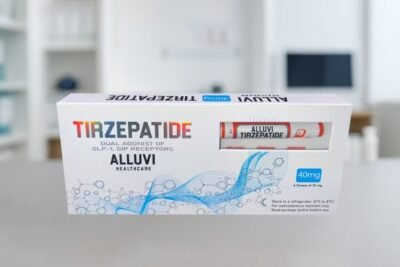
For researchers designing comparative studies between dual and triple agonism, both compounds are essential. The tirzepatide 40mg pen and the retatrutide research bundle are both stocked at EvolvelabsUK for UK-based laboratory procurement.
Choosing Tirzepatide for Your Research Protocol
Tirzepatide is the better-documented compound at this stage of research development. Its phase 2 and phase 3 data set spans thousands of participants across the SURPASS and SURMOUNT trial programmes, giving researchers an extensive published literature base against which to calibrate experimental design and expected outcomes. For research programmes that need an established dual GIP/GLP-1 comparator with deep published data, tirzepatide is the natural reference compound.
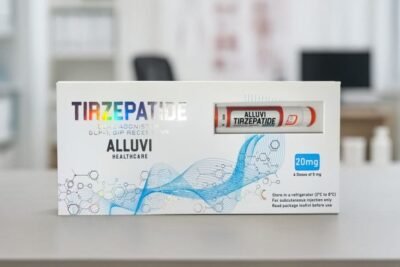
It is also the appropriate choice for study designs where researchers want to isolate the contribution of GIPR agonism to metabolic outcomes — with semaglutide as the GLP-1R mono-agonist control and tirzepatide as the dual-agonist comparator. Researchers accessing the tirzepatide 40mg pen through EvolvelabsUK receive research-grade material with purity certification suited to these rigorous design requirements.
Choosing Retatrutide for Your Research Protocol
Retatrutide is the compound of choice when study design requires the thermogenic GCGR axis alongside incretin receptor engagement. Research programmes exploring energy expenditure mechanisms, hepatic lipid metabolism, or multi-receptor metabolic modelling require a triple-axis compound that tirzepatide cannot provide. Retatrutide is also the appropriate compound for researchers building experimental frameworks ahead of Phase 3 regulatory data — getting laboratory protocols established now positions research teams to interpret emerging clinical data rapidly as it publishes.
Phase 2 liver disease data published in Nature Medicine (2024) identifies retatrutide as the compound with the most comprehensive hepatic fat reduction profile currently under clinical investigation, making it the correct peptide for NAFLD and MASH preclinical study designs. The Alluvi Retatrutide 40mg and Retatrutide 20mg RD formats are both available through EvolvelabsUK for UK-based researchers.
Running Both Compounds in a Comparative Study Design
The strongest research designs in incretin science often use tirzepatide and retatrutide together as comparator compounds, with a GLP-1R mono-agonist (semaglutide) as the single-axis control. This three-arm design allows researchers to isolate the contribution of each additional receptor axis — GIPR alone, then GIPR plus GCGR — to the observed experimental outcomes.
For UK laboratories planning this design, the retatrutide bundle provides cost-efficient multi-unit procurement for the retatrutide arm. The EvolvelabsUK shop covers both compounds in a single procurement workflow, minimising supplier management overhead for research teams. The PubMed Central triple agonism review (2025) provides an excellent overview of the evidence base supporting this comparative design approach.
Where to Source Both Compounds in the UK
Both tirzepatide and retatrutide must meet research-grade purity standards (98% or above) with independently issued certificates of analysis. EvolvelabsUK supplies both compounds through a documented UK supply chain with batch-level COA for every order. Review our quality and sourcing standards on the About EvolvelabsUK page. Researchers building multi-compound protocols alongside their incretin work will also find NAD+ injections and Glow 70mg stack relevant for systemic metabolic and cellular research programmes.